

Related case study


By Anna Zavalishina, Business Development Lead, Europe, ideaHelix
Anna leads business development for ideaHelix in Europe, working with Salesforce account teams and Revenue Cloud customers across EMEA. ideaHelix is a Salesforce Summit Consulting Partner specializing in Agentforce Revenue Management and Salesforce Industries, with automation tools available on AppExchange.
In June we ran two webinars on the question we hear most from Salesforce CPQ customers: what comes after CPQ, and what does the move to Agentforce Revenue Management (ARM) actually involve?
We were joined by two guests from Salesforce — David Beebe, Head of Revenue Solutions in the Chief Customer Office, and Kaushik Basu, Architect in the Customer Success Group — alongside ideaHelix’s own Sergey Zanchevskiy, VP of Customer Success, and Artyom Livensky, VP of Architecture. Across the two sessions: the business case, the architecture, real customer results, and a live demo of a CPQ bundle and its install base migrating to ARM end to end.
Both recordings are now available. Here’s what’s in each, and where to jump in.
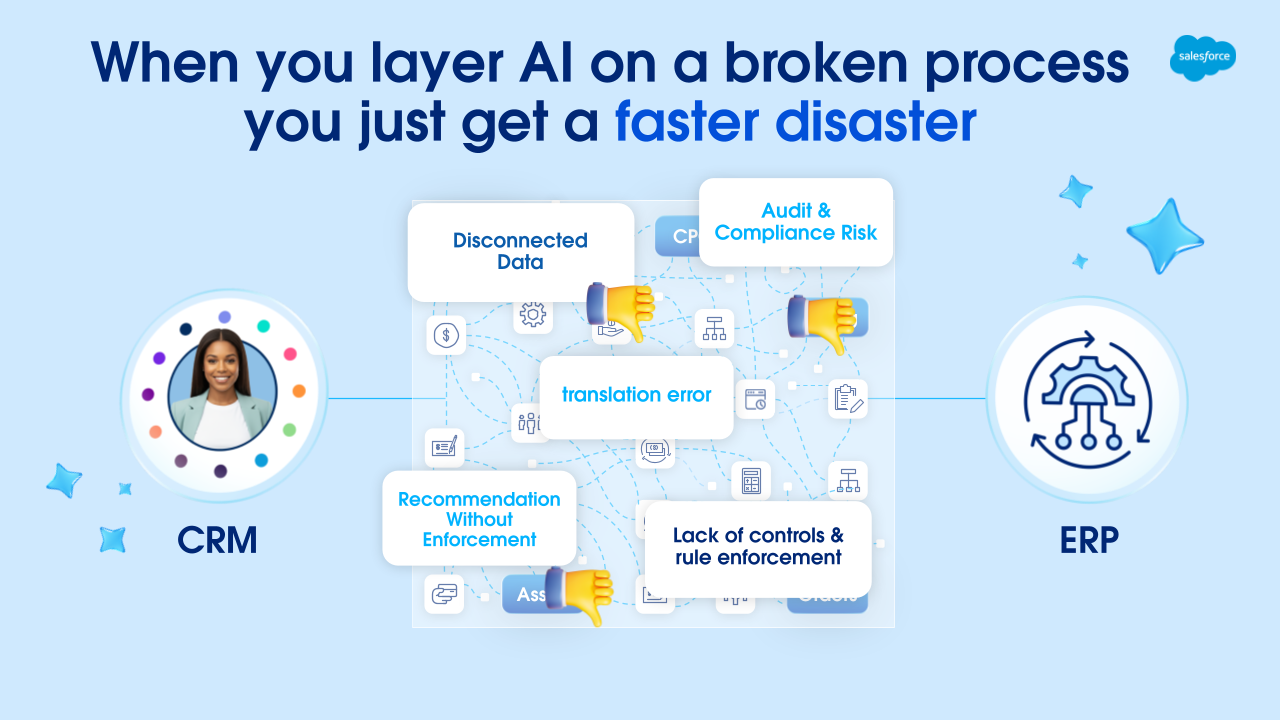
David Beebe has spent close to ten years at Salesforce across the Revenue Cloud portfolio, and he opened with the problem he sees in nearly every customer conversation: revenue isn’t a number on a dashboard, it’s a process that touches sales, finance, IT, product, and services. When those functions run on disconnected systems and spreadsheets, you get what Salesforce calls the messy middle — and adding AI on top of it doesn’t fix anything. In David’s words, “you get a faster disaster.”
A few moments worth your time:
“Don’t think about it like CPQ 2.0. It’s intended to do all the things that CPQ did, and then bring in the other parts of the end-to-end process — that department, that group, that channel — so we can all start to see everything end to end.”
David Beebe
Head of Revenue Solutions, Salesforce
The second session went a level deeper, for architects and RevOps teams planning the actual move. Kaushik Basu, who has spent two decades implementing CPQ across vendors, laid out the architectural difference in one line: CPQ is a managed package built in Apex; ARM is built 100% on the Salesforce core platform, with an attribute-based catalog, a declarative pricing engine, and Dynamic Revenue Orchestrator for order decomposition and fulfillment.
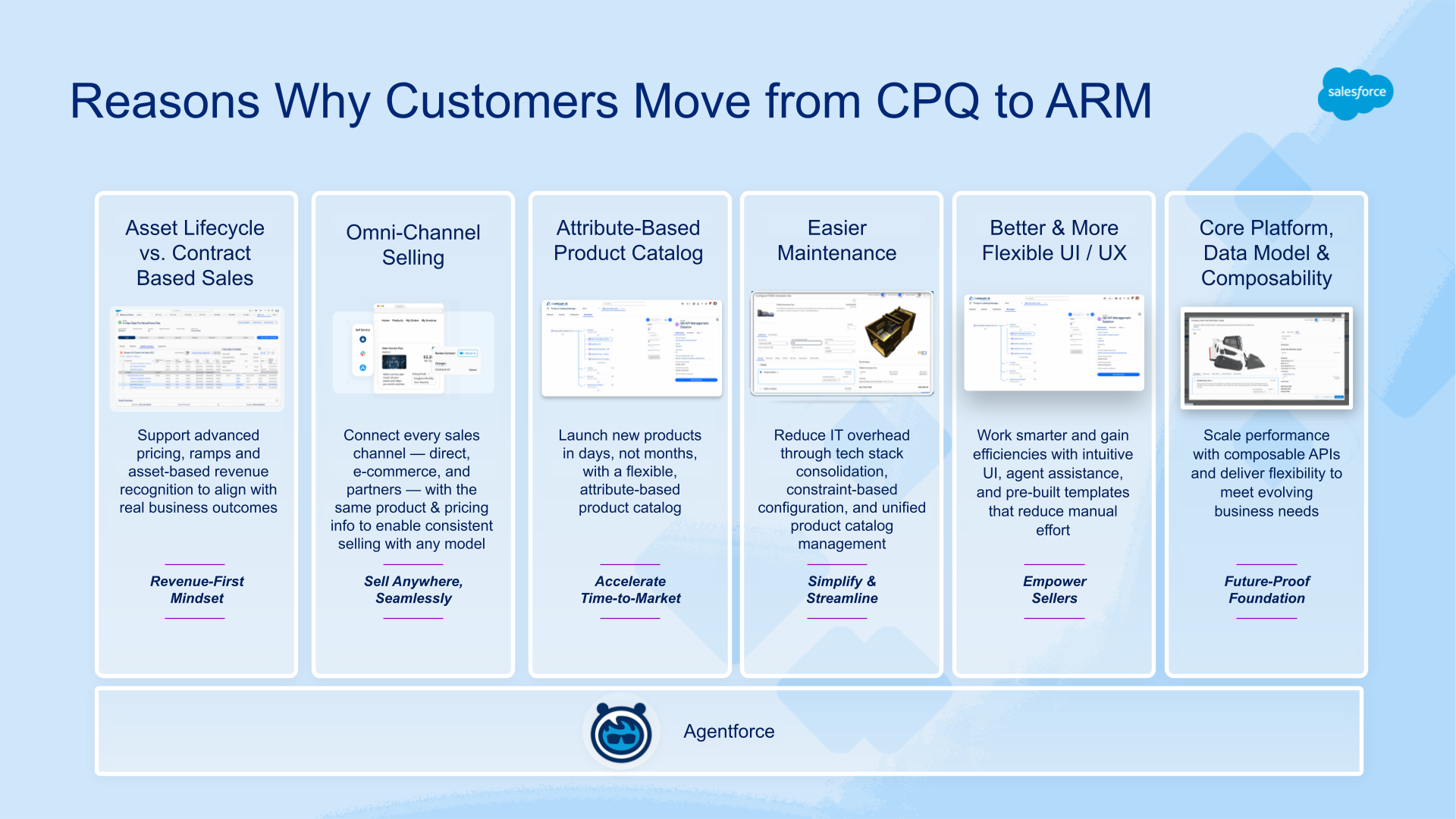
What you’ll take away:
That last part matters more than it sounds. Migrating a catalog is one thing; migrating a live install base so you can amend, renew, and cancel on day one is the part most customers worry about — and the part Kaushik reacted to:
“We get asked by different vendors to showcase their migration tool, and one thing we always ask: show me taking a CPQ subscription and creating an amend quote from it. More often than not — nothing. What we saw here was demonstrated end to end… it is a huge accomplishment.”
Kaushik Basu
Architect, Customer Success Group, Salesforce
Both audiences asked the same two questions: how much, and how long. Our answer is the same one we gave on air. We start every engagement with a two-week assessment at zero cost. We deploy our Estimator Tool against your org, analyse your configuration against 300+ expert-curated rules, and come back with a precise effort estimate and migration roadmap — yours to keep, whatever you decide next. Most customers then migrate their highest-priority product family within our eight-week Quickstart.
If you’re running Salesforce CPQ and weighing the move to Agentforce Revenue Management, watch the sessions, then get in touch. Two weeks, zero cost, and you’ll know your scope, your risks, and your timeline — with real data from your own org.








If you want help with an existing Salesforce Industries deployment or to scale your business with Revenue Cloud ideaHelix can deliver faster and better Salesforce outcomes.
"*" indicates required fields